Answer Capsule
The real change in AI coding in 2026 is not one smarter model but a shift in the center of gravity toward ‘orchestration’ — weaving several AI agents together to divide up the work. Dynamic workflows like whole-codebase bug hunts and security audits are becoming standard, and for solo businesses and solo developers the opportunity outweighs the barrier to entry.
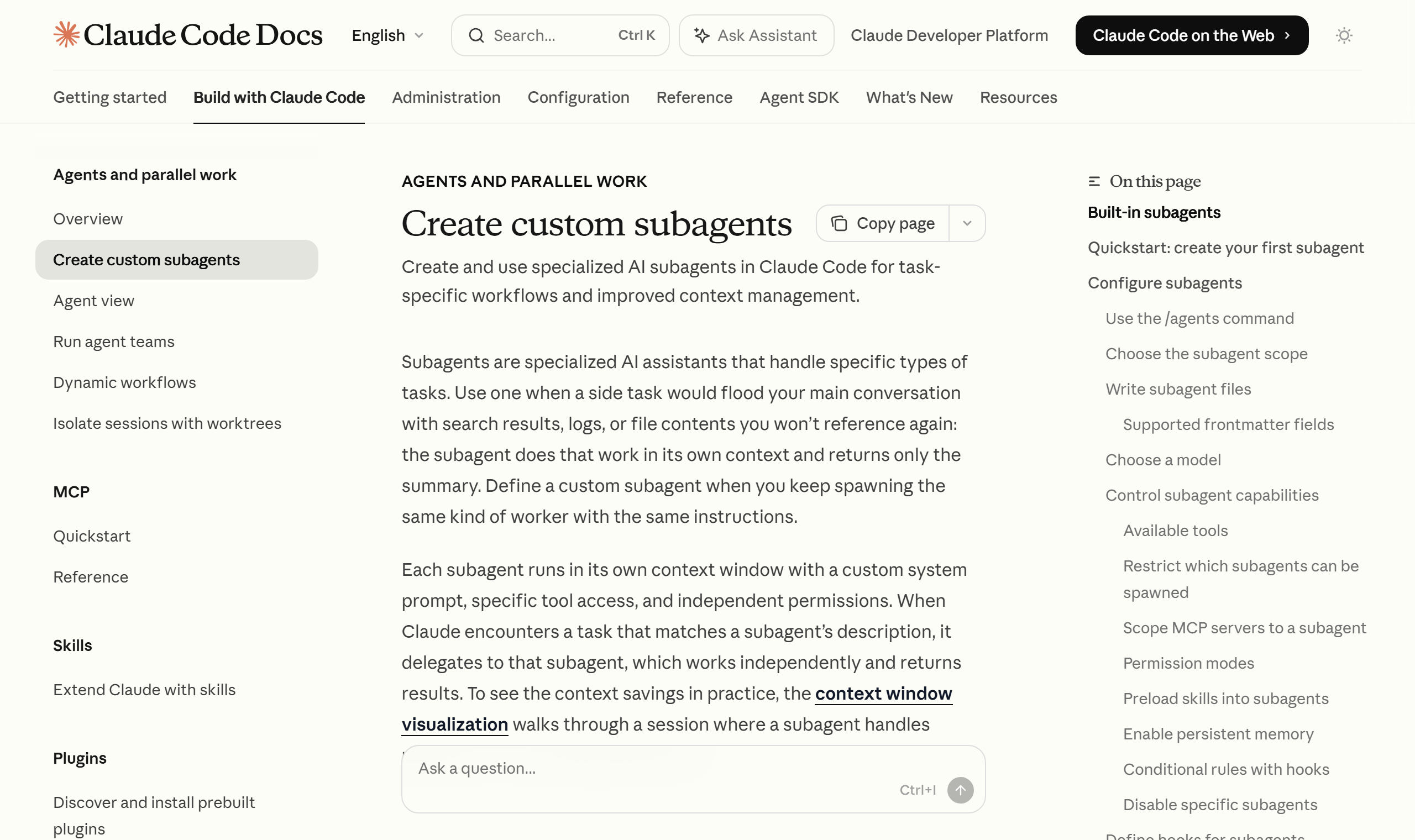
In June 2026, Anthropic unveiled its latest model, Claude Fable 5. Every time a new model drops, the industry lines up to compare benchmark scores and price tables. But this year, that familiar backdrop has been shifting bit by bit. More important than “which model scores a few points higher” has become “how do you weave several agents together to get work done in one flow.”
Running NABERAL as a one-person operation, I have handed trend collection, writing, verification, and publishing each to a different agent and connected them into a single pipeline. What I felt in that process is exactly this change. Rather than squeezing the last drop of performance out of one model, arranging several agents with distinct roles lifted the quality of the actual output far more.
This article is not a pitch for a particular model. Its purpose is to map where the structure of the 2026 AI coding ecosystem is moving. We will walk in order through why the era of ‘model bragging’ is fading, what agent orchestration is, how dynamic workflows operate across an entire codebase, and what solo businesses and solo developers should take from this trend.
① Why the Era of ‘Model Bragging’ Is Fading
Summary: The competition over a single model’s performance is not over, but the center of gravity has moved. Models have already advanced enough to handle most coding tasks well, and the differentiator now lies in “what you make that model do, and in what flow.” Comparing model specs alone has become a poor way to explain real productivity differences.
Even a few years ago, a new model launch was essentially a scoreboard reveal. How many percentage points more of the same problem set it solved, how much the per-token cost dropped — that made the headline. Such comparisons still matter, but one limitation has become clear: a higher benchmark score does not make my own work correspondingly faster.
The reason is simple. The point where you get stuck in practice is no longer “the model isn’t smart enough.” Models are already good at writing a plausible function, explaining a bug, and proposing a refactor. The real bottleneck lies in how you connect that capability to your whole codebase and workflow, and how smoothly one task hands off to the next when it finishes.
So the talking point in 2026 shifted from the model itself to ‘composition.’ Even as Anthropic released its latest model, Claude Fable 5, in June 2026, it put the weight of the announcement on workflows that orchestrate multiple agents rather than on single-model specs. The recognition is taking hold that the model is the ingredient, and how you arrange that ingredient sets the flavor of the dish.
I reached the same conclusion. At first I thought “one best model and I’m set,” and crammed every step into a single agent. The results were poor. Running collection, writing, and verification all at once within a single flow, I could barely even trace which step let quality slip. Only after splitting the roles could I inspect and fix each step independently.
② What Is Agent Orchestration?
Summary: Agent orchestration is a way of arranging several AI agents with different roles so that a single conductor distributes the work and gathers the results. Multiple agents handle their assigned parts, and human-in-the-loop checkpoints along the way keep you in control.
The orchestra analogy makes it easy to grasp. A violinist, a cellist, and a wind player each perform their own score, and the conductor coordinates the whole. Agent orchestration is the same. Instead of one agent doing everything, role-divided agents each handle their assigned part, while a coordinating higher-level agent (or a human) splits the work and reassembles the results.
The heart of this structure is ‘division of labor’ and ‘control.’ Division of labor makes each agent concentrate on one narrow responsibility, raising quality. Control is secured through the points where a human intervenes at the important junctions of the flow — that is, human-in-the-loop. Before hard-to-undo steps like publishing or deployment, a person checks once and then proceeds.
This multi-agent orchestration was given significant weight in Anthropic’s developer-event announcements too. The direction is to take a large task too heavy for a single agent, split it in parallel across several agents, and gather their results. In terms of where the capability is headed, you can sum it up as AI coding tools evolving from a “secretary working alone” into a “manager who assembles a team and distributes the work.”
Speaking frankly about my one-person operation, thanks to this structure I get to work ‘like a team’ even by myself. There is a separate agent for gathering trends, for drafting, and for fact-checking, and I only play the conductor between them — checking a result and passing it on. Compared with one person directly doing every role, keeping role-specific agents and just minding the junctions is far less tiring and far less error-prone. One thing to make clear, though: this structure does not mean “it all runs on its own without a human.” Take the conductor out and the orchestra falls apart.

③ Dynamic Workflows — Working Across the Entire Codebase
Summary: A dynamic workflow targets not a single fixed file but the whole codebase, with the agent expanding its own scope as it performs tasks like bug hunts, security audits, and hardening. It runs safely in a sandbox and can connect to an in-house MCP server to work with internal tools and data.
If orchestration is a question of ‘who does the work,’ a dynamic workflow is a question of ‘what, and how far, the work reaches.’ Past AI coding tools were generally helpful at the level of one file, one function. The 2026 trend is different. The agent sweeps across the entire codebase and carries out work consistently.
A representative example is a bug hunt targeting the whole codebase. Rather than a single specific file, it finds potential errors across the whole project, follows the related code, and narrows the problem down. Security audits are the same. It inspects items like permission handling, input validation, and dependency vulnerabilities across the entire codebase, then moves on to hardening work that patches the weaknesses it found. Such work is ‘dynamic’ in that the scope is not fixed in advance — the agent expands it dynamically as the context demands.
Two important safeguards appear alongside. The first is the sandbox. Even as the agent runs code and handles files, having it operate inside an isolated environment controls the impact on real systems. The second is an in-house MCP server connection. A manager agent attaches to an MCP (Model Context Protocol) server set up internally, so it can safely make use of tools and data not exposed to the outside. MCP is a spec aiming to standardize the way agents connect to external tools and data, and interest in it is growing fast across the ecosystem.
In terms of where capability is headed, AI coding is moving from “a tool that fixes one line for you” to “a colleague that inspects and mends the whole codebase in one pass.” Of course, the wider the scope of the work, the more human review matters, because a broader reach means a bigger blast radius when something is touched wrong. That is why human-in-the-loop is not an option but a baseline premise of this workflow.
④ What It Really Means for a Solo Business
Summary: The biggest weakness for large enterprises — the burden of integrating with complex legacy systems — is relatively small for a solo business or solo developer. The simpler the system, the easier it is to orchestrate multiple agents, and if you start with one narrow task plus a human-review safeguard, even a single person can work like a team.
The message this structural shift sends to a solo business or solo developer is surprisingly upbeat. When adopting multi-agent orchestration in a large organization, the biggest wall is integration with complex legacy systems. The more existing systems you have to attach to, and the more permissions and security policies are entangled, the slower and riskier adoption becomes. But the solo-business side carries that burden far more lightly. If the system is simple, it is easy both to slot an agent in and to wire up a new flow.
Put another way, it becomes not ‘something you can’t do alone’ but ‘something you can experiment with quickly, alone.’ While a giant organization goes through rounds of integration meetings, a solo operator can pick one narrow task and immediately try workflow automation with multiple agents. That is exactly how I grew NABERAL. I did not try to automate all my work at once; I started by handing repetitive single tasks to agents, measured the results, and expanded slowly.
One honest caveat, though. This trend is not a promise that “your business runs on a single button press.” Orchestrating agents still requires human planning and judgment, and a poor design only piles on complexity that is harder to trace. The key is not to make adoption itself the goal. Only when the planning comes first — “which task, in what order, and where does a human check as I automate” — does the multi-agent setup become not a buzzword inside a statistic but a colleague that genuinely takes work off your hands.
⑤ What to Prepare Now
Summary: Before grand adoption comes small preparation. Pick one repetitive task and hand it to an agent, leave a human-review point at hard-to-undo steps, and record results to improve. For tools, it is safer to choose by “how naturally it attaches to my workflow” than by model performance.
In the flow of this shift, here are three preparations a solo operator can start right away.
- Start with one narrow task. Not “automate all my work,” but pick a single task that repeats daily (say, organizing reference material, drafting a first version, or checking a checklist) and hand that one to an agent. Starting small lets you see what works and what doesn’t.
- Keep a human-review point. Before hard-to-undo steps like publishing or deployment, place a human-in-the-loop gate where a person checks once. In effect, you put a safeguard where the agent stops.
- Record the results. Note how much time you saved and whether errors went up. Without measurement there is no improvement. Workflow automation isn’t something you wire up once and finish — it is work you keep refining while watching the record.
In choosing tools, look first at “how naturally it attaches to my workflow” rather than a model-performance ranking. Several suppliers besides Anthropic are moving fast toward supporting multi-agent and dynamic workflows, so rather than trusting a spec at a particular moment, it is safer to make a habit of confirming with official announcements and documentation at the time you use them. Models are updated quickly, but the value of a structure that “orchestrates several agents well” looks likely to remain valid for a good while.
Wrapping Up
Reduced to a single sentence, the state of AI coding in 2026 is: “models have become smart enough, and now the contest turns on how you orchestrate them.” The release of a new model like Claude Fable 5 is a clear milestone, but a bigger signal is that the weight of the announcement itself has moved toward multi-agent orchestration and dynamic workflows.
In this trend, a solo business and a solo developer stand in a different position from a giant enterprise. The side with less integration burden can actually experiment faster and capture the benefits of the structure. One narrow task, a human-kept safeguard, and measurement — when those three are in place, an AI agent becomes not a buzzword in the conversation but a solid team for the person working alone.
Sources: Anthropic (official), Anthropic News